Which Material Makes the Most Durable Outdoor Dining Set?
There’s nothing quite like gathering friends or family around an outdoor dining set for a summer barbecue, a weekend brunch, or a quiet evening meal under the stars. But outdoor furniture faces a relentless onslaught of elements: scorching sun, heavy rain, humidity, salt spray (if you’re near the coast), and even curious pests. Over time, flimsy materials can fade, crack, rust, or warp—turning your investment into a worn-out eyesore.
If you want an outdoor dining set that lasts for years (or even decades) without constant replacement or expensive repairs, the material is the single most important factor. Not all outdoor materials are created equal, so let’s break down the top contenders, their durability perks, and which scenarios they’re best for. By the end, you’ll know exactly which material to choose for a set that stands up to Mother Nature and looks great.
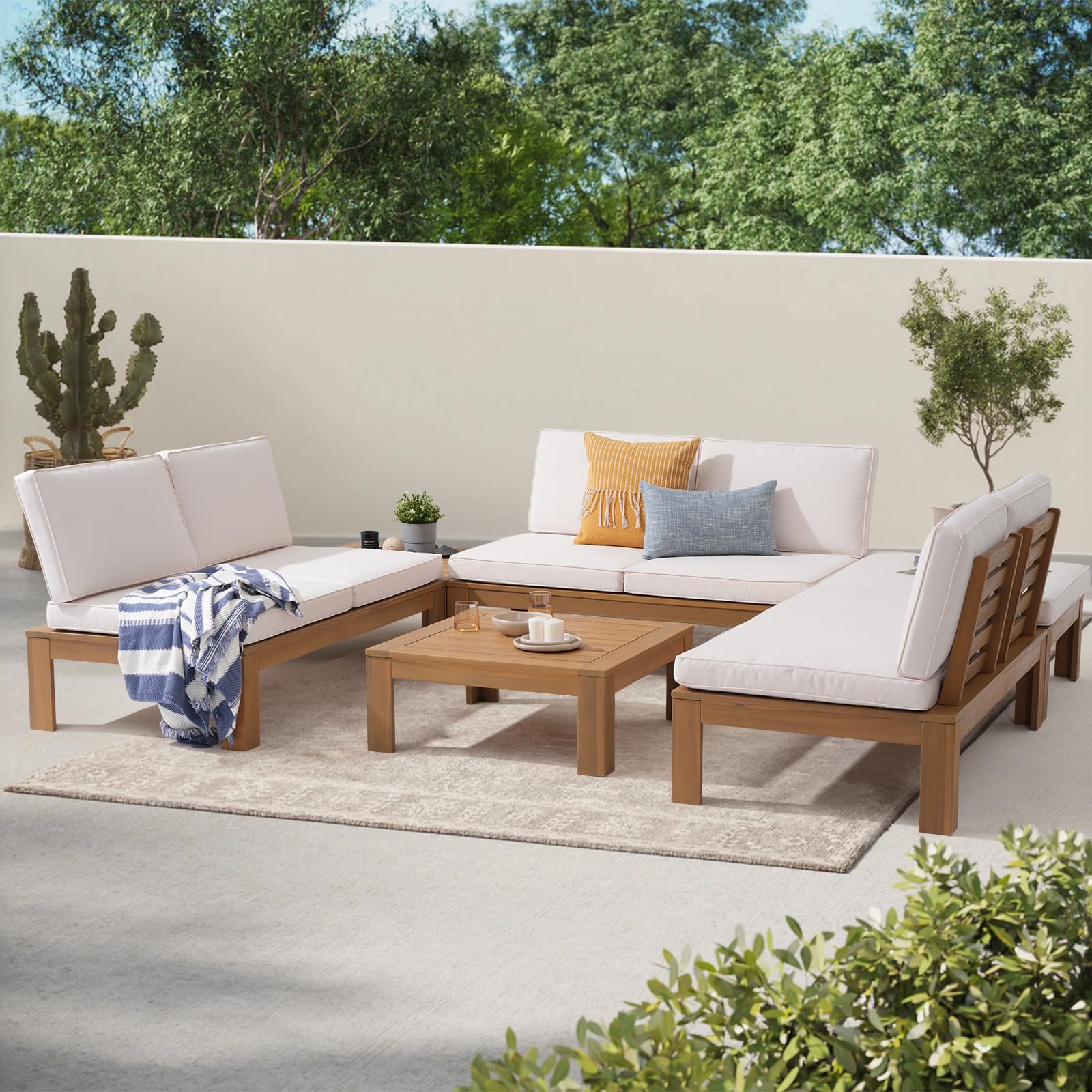
1. Teak: The Gold Standard for Timeless Durability

When it comes to outdoor wood furniture, teak is in a league of its own—and for good reason. This tropical hardwood, native to Southeast Asia, is naturally engineered to resist the worst outdoor conditions, making it a favorite among homeowners and designers alike.
Why It’s Durable:
Teak contains high levels of natural oils and silica, two compounds that act as built-in protectors. The oils repel water (preventing rot and mold), while silica makes the wood resistant to scratches, dents, and even termites. Unlike softer woods (like pine or cedar), teak won’t warp or crack when exposed to extreme temperature swings—from freezing winters to sweltering summers.
Longevity:
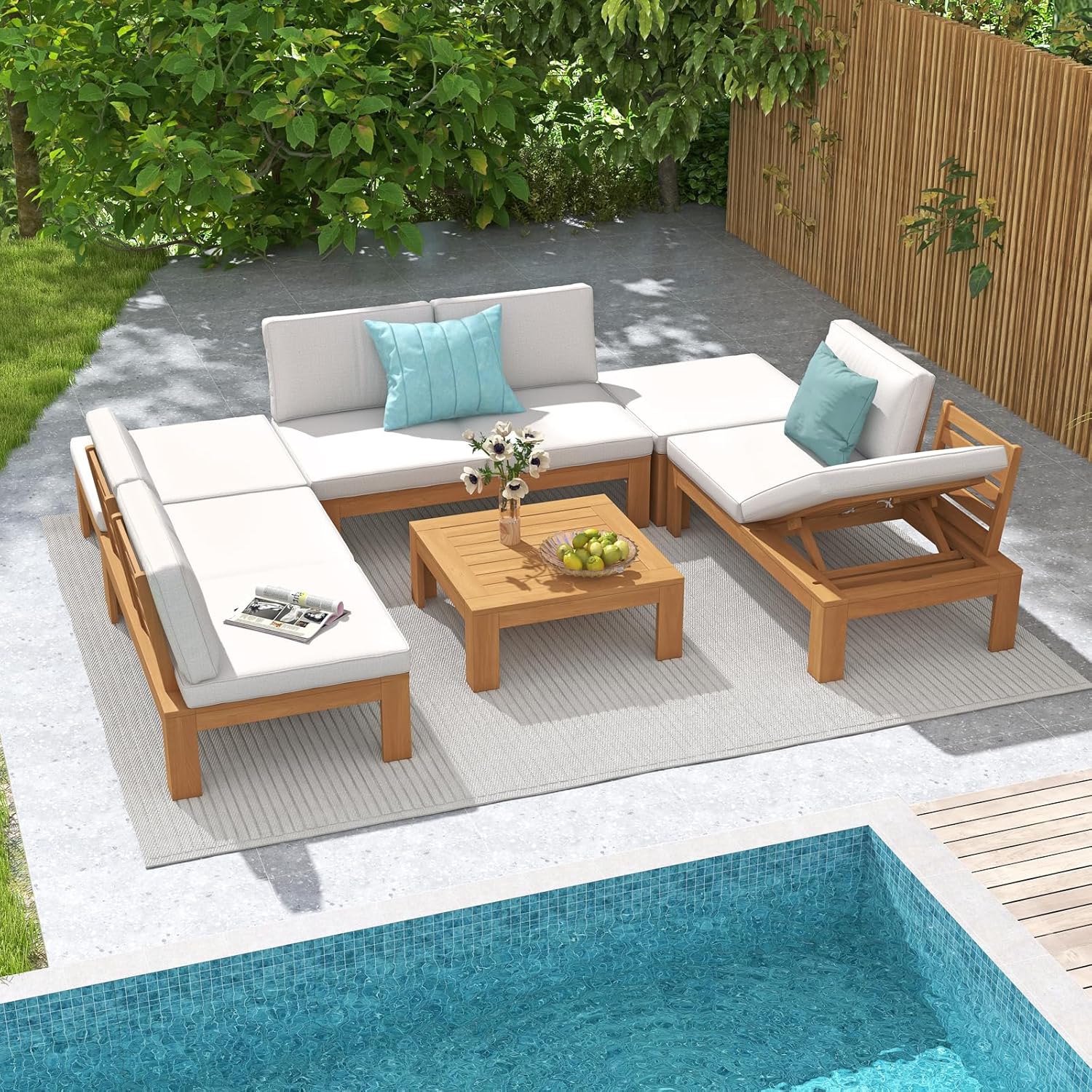
With minimal care, a teak outdoor dining set can last 25–50 years (yes, you read that right). Many teak sets even develop a beautiful, silvery-gray patina over time—a sought-after look that adds character without sacrificing strength. If you prefer to keep the warm, golden hue of new teak, a yearly coat of teak oil will maintain its color. However, teak furniture is usually more expensive; eucalyptus and acacia wood are also good choices.
Best For:
- Coastal homes (teak resists saltwater corrosion better than most materials).
- Garden spaces where you want a classic, natural aesthetic.
- Anyone willing to invest in long-term quality (teak is pricier upfront but saves money on replacements).
2. Aluminum: Lightweight, Rust-Proof, and Low-Maintenance
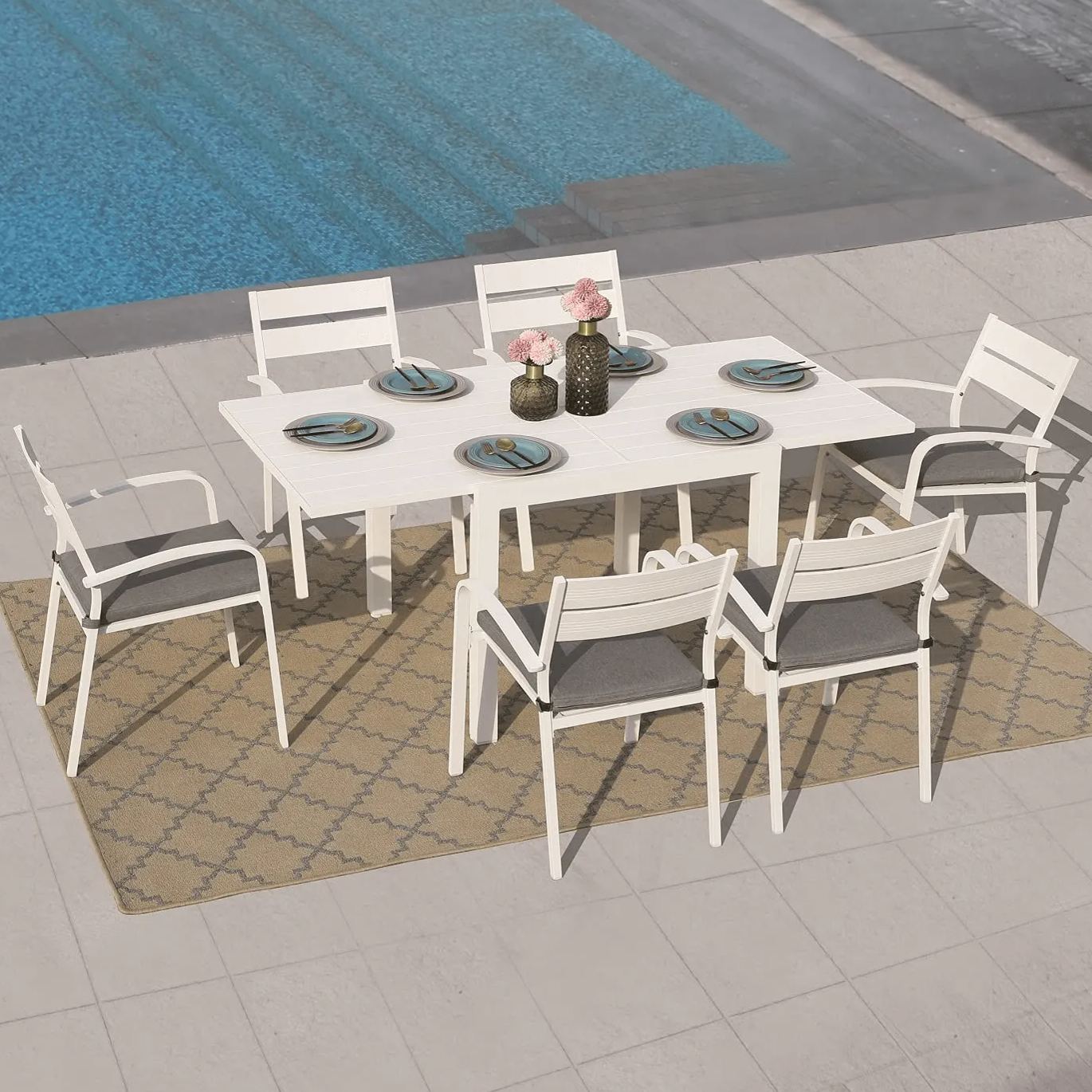
If you want durability without the heaviness of teak, aluminum is a standout choice. Modern aluminum outdoor dining sets are far from the flimsy, easily dented versions of the past—today’s models are often powder-coated or anodized for extra strength.
Why It’s Durable:
Aluminum is naturally rust-proof, which is a game-changer for wet climates or areas with frequent rain. Unlike steel (which we’ll cover next), it doesn’t oxidize or develop orange rust spots. The powder-coating process adds a thick, chip-resistant layer that protects against UV rays (preventing fading) and scratches from daily use. Plus, aluminum is lightweight—so you can move the set around your patio easily, but it’s still sturdy enough to withstand strong winds (look for “cast aluminum” for extra heft).
Longevity:
A well-made aluminum dining set can last 15–25 years with basic care (occasional wiping with soap and water). The powder coating may show minor wear after a decade, but it’s easy to touch up with matching paint.
Best For:
- Small patios or balconies (lightweight = easy to rearrange).
- Humid climates or regions with heavy rainfall (no rust worries!).
- Anyone who hates high-maintenance furniture (no oiling, staining, or sealing required).
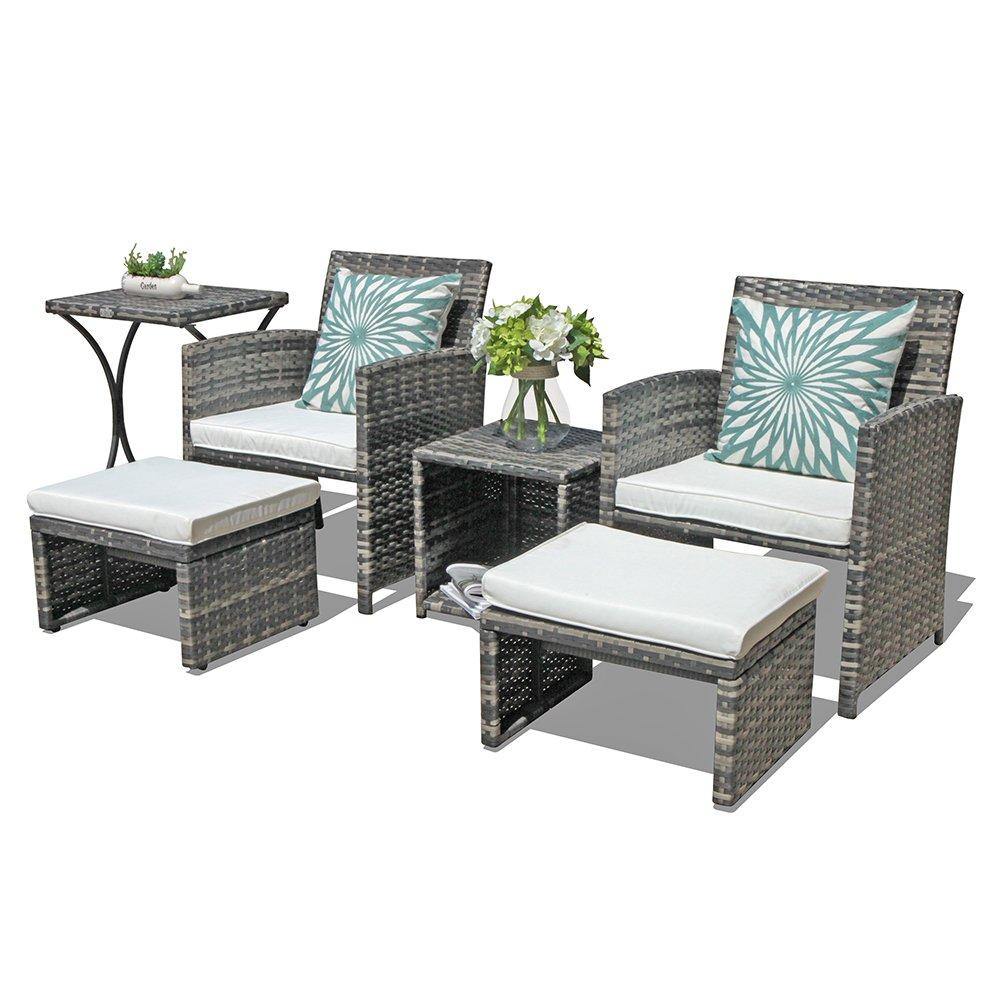
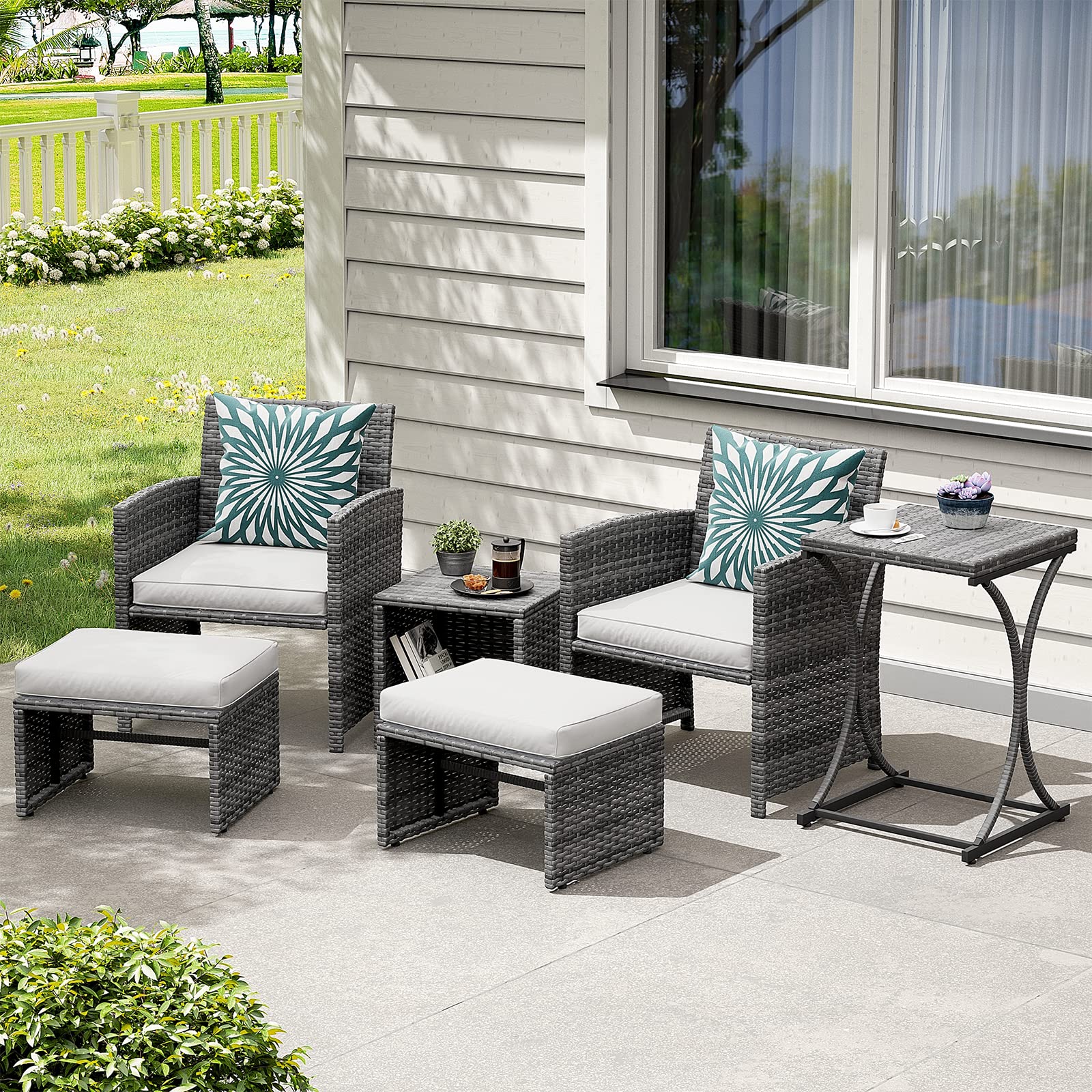
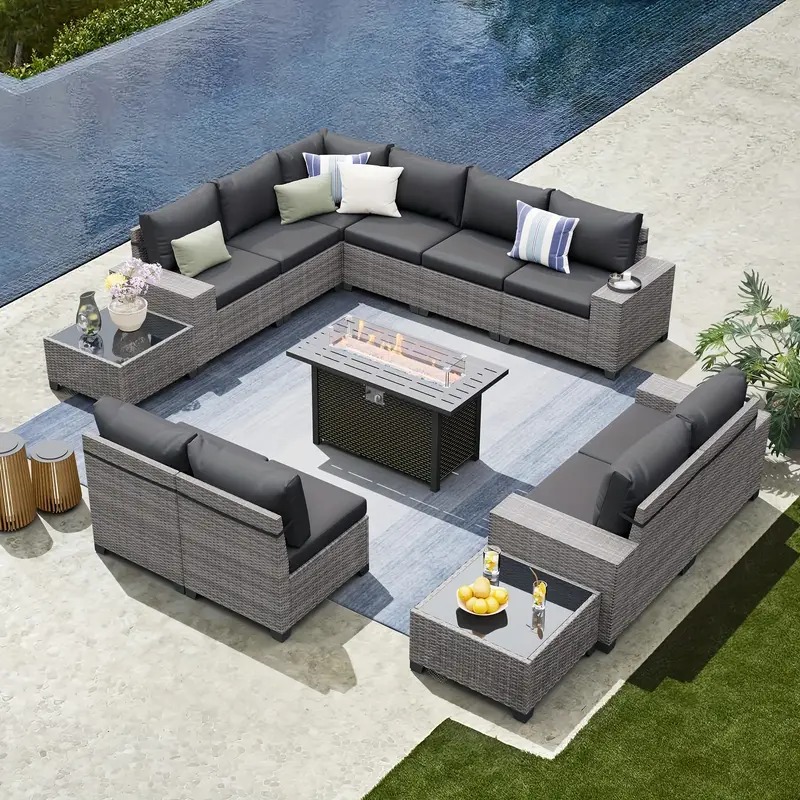
3. Synthetic Wicker (Resin Wicker): Weather-Resistant with a Cozy Vibe
![Outdoor Patio Furniture Set Wicker Conversation Set with Lift Coffee Table Sectional Dining Set]()
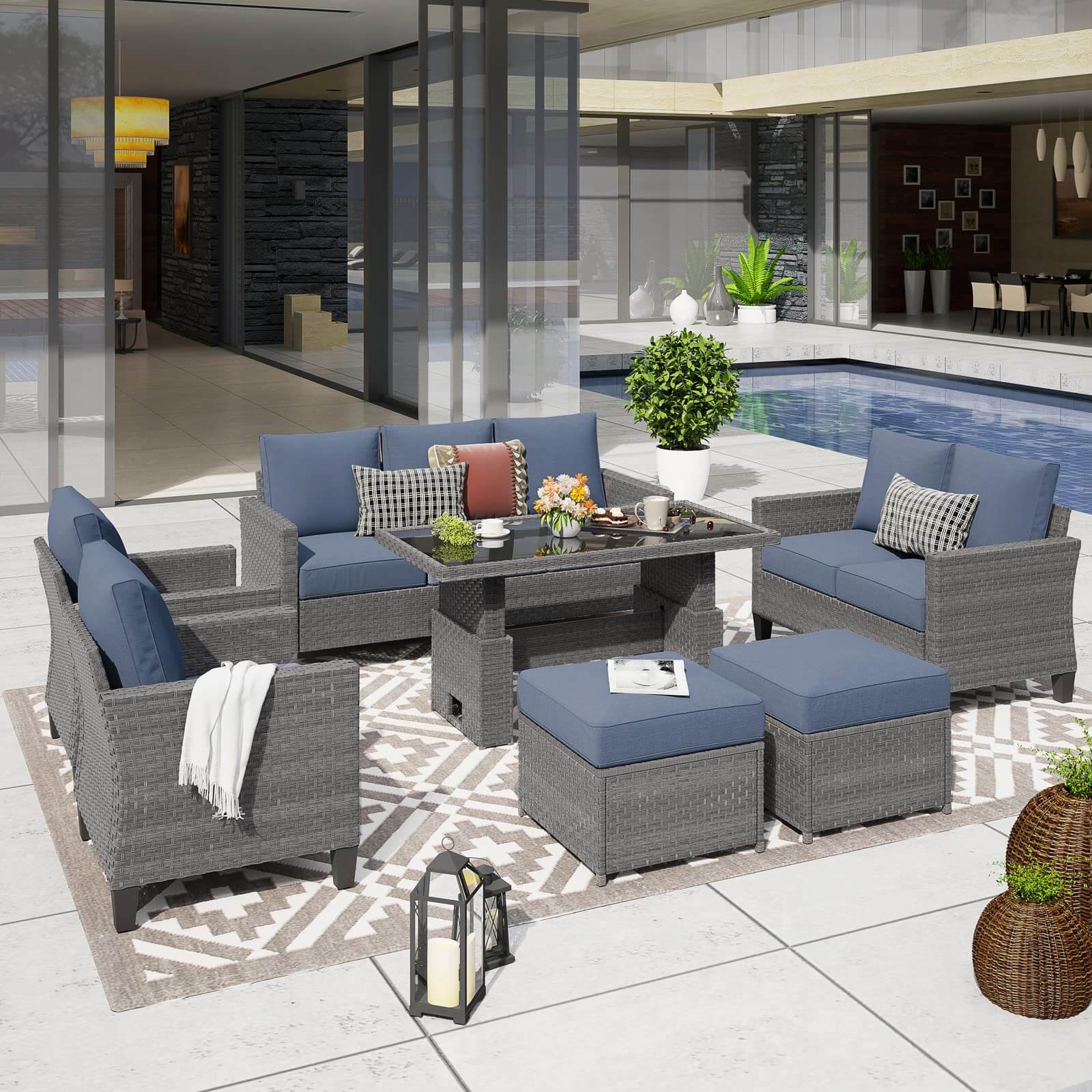
If you love the look of traditional wicker but hate how it deteriorates outdoors, synthetic wicker (also called resin wicker) is the solution. Made from polyethylene or polypropylene, this material mimics the texture of natural rattan but is built for the great outdoors.
Why It’s Durable:
Synthetic wicker is 100% waterproof—rain, snow, or pool splashes won’t cause it to rot, mildew, or unravel (unlike natural wicker, which soaks up moisture and falls apart quickly). High-quality resin wicker is also UV-stabilized, meaning it won’t fade or become brittle in direct sunlight. Most sets have an aluminum or steel frame (look for rust-resistant frames!) for added stability, so the wicker itself stays taut and doesn’t sag over time.
Longevity:
A good resin wicker dining set can last 10–15 years if you store the cushions (more on that later) during harsh winters. The wicker may fade slightly after years of sun exposure, but it won’t break or fray.
Best For:
- Patios or decks where you want a casual, tropical, or bohemian style.
- Areas with mild to moderate weather (it handles rain well, but extreme cold can make resin slightly brittle—just avoid leaving it uncovered in blizzards).
- Families with kids or pets (resin is easy to wipe clean if food or drinks spill).
4. Steel: Heavy-Duty Strength (But Choose Wisely!)
![3pcs Patio Bistro Set Rattan Armchairs with Round Glass Coffee Table, Cream & Aqua]()
.png?w=2000&h=2000&q=80)
Steel is one of the strongest materials for outdoor furniture, but not all steel is created equal. If you opt for steel, you need to look for galvanized or powder-coated steel—otherwise, you’ll end up with a rusty mess.
Why It’s Durable (When Done Right):
Galvanized steel is coated with a layer of zinc, which acts as a barrier against rust and corrosion. Powder-coated steel adds an extra layer of protection, making it resistant to scratches, UV rays, and moisture. Steel frames are incredibly sturdy—they won’t tip over in wind, and they can support heavy tabletops (like stone or thick wood).
What to Avoid:
Stay far away from “raw” or uncoated steel. It will start rusting within months of exposure to rain or humidity, and once rust sets in, it’s nearly impossible to reverse.
Longevity:
Galvanized/powder-coated steel sets can last 15–20 years if you inspect them yearly for chips in the coating (touch up chips immediately to prevent rust).
Best For:
- Large patios or outdoor spaces where you need a heavy, stable set (great for windy areas).
- Modern or industrial-style homes (steel has a sleek, bold look).
- Anyone who prioritizes maximum strength (steel can handle heavy use, like frequent dinner parties).
5. Concrete: Ultra-Durable (But Not for Everyone)
![]()
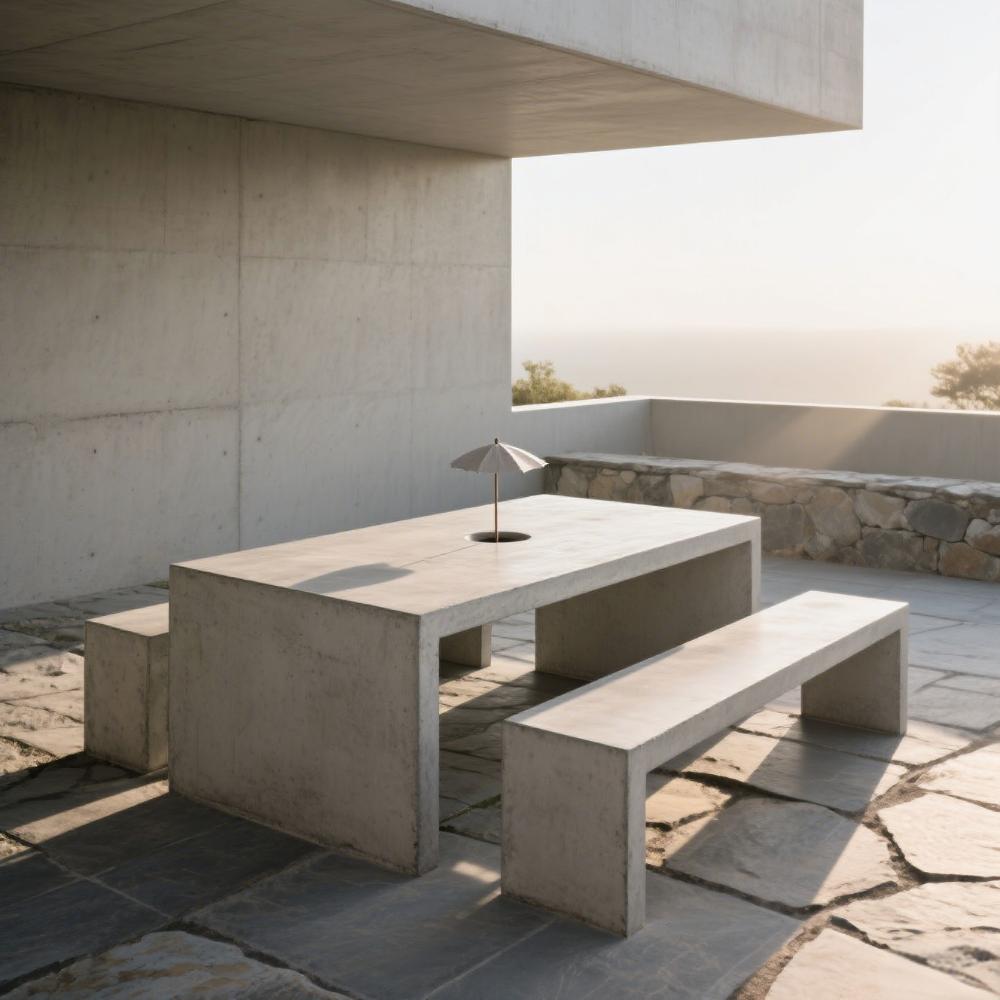
Concrete outdoor dining sets are the definition of “built to last.” They’re not just for commercial spaces (like restaurants)—many homeowners love their modern, minimalist look and unmatched durability.
Why It’s Durable:
Concrete is impervious to water, UV rays, pests, and scratches. It won’t fade, warp, or rust, and it can withstand extreme temperatures (from -20°F to 120°F). Most concrete sets have a reinforced steel core for extra strength, so the tabletop won’t crack under weight (just avoid dropping heavy objects directly on it—even concrete can chip).
Longevity:
A concrete dining set can last 30+ years—it’s basically a one-time purchase. The only maintenance needed is occasional cleaning with a pressure washer or soap and water.
Best For:
- Permanent outdoor spaces (concrete is extremely heavy—you won’t be moving it once it’s placed).
- Modern or contemporary homes (concrete pairs beautifully with sleek chairs and bold cushions).
- Areas with harsh weather (it handles snow, rain, and sun with zero issues).
What to Consider:
Concrete is heavy—make sure your patio or deck can support the weight (most can, but it’s worth checking with a contractor if you’re unsure). It’s also cold to the touch, so you’ll want to add placemats or cushions for comfort.
How to Make Any Outdoor Dining Set Last Longer
No matter which material you choose, a little care goes a long way in extending its life:
- Cover it: Invest in a high-quality, waterproof cover for your set when it’s not in use (especially during winter or heavy rain).
- Store cushions: Even weather-resistant cushions will last longer if you store them indoors during harsh weather. Look for cushions with removable, washable covers.
- Clean regularly: Wipe down tabletops and chairs with soap and water every few weeks to remove dirt, pollen, and food residue. For tough stains, use a soft brush or pressure washer (on low settings for delicate materials like resin wicker).
- Inspect yearly: Check for chips in powder coating, loose wicker, or rust spots. Fix small issues early to prevent them from getting worse.
Final Verdict: Which Material Is Right for You?
There’s no “one-size-fits-all” answer—your choice depends on your climate, style, budget, and lifestyle:
- Most durable overall: Concrete (30+ years) or teak (25–50 years).
- Best for low maintenance: Aluminum or HDPE lumber.
- Best for coastal areas: Teak or aluminum (resists saltwater).
- Best for style + durability: Resin wicker (cozy) or steel (modern).
Investing in a durable outdoor dining set means you’ll spend less time replacing furniture and more time enjoying outdoor meals with the people you love. Whether you choose teak, aluminum, concrete, or something else, the key is to pick a material that fits your environment—and that you’ll be happy looking at for years to come.
Have you tried any of these materials? Share your experience in the comments below—I’d love to hear which one works best for your outdoor space!
Comment


-(1).jpg?w=3500&h=2625)


.jpeg?w=1600&h=1600)