The Ultimate Guide to Selecting Premium Patio Umbrellas
When designing an upscale outdoor living space, the patio umbrella is often treated as an afterthought—a quick accessory added to block the sun. However, seasoned landscape architects and interior designers know that a high-quality outdoor umbrella is a structural anchor. It defines the layout, controls the microclimate of your patio, and shields your investments in premium outdoor upholstery from UV degradation.
Choosing the wrong umbrella results in a faded canopy, a rusted frame, or worse, a sail that takes flight during the first summer storm. This professional guide breaks down the technical specifications you need to consider to select the perfect shade structure for your luxury outdoor space.
1. Structural Anatomy: Market vs. Cantilever
The first decision dictates both the aesthetic and the functional flow of your outdoor layout. Outdoor umbrellas broadly fall into two structural categories:
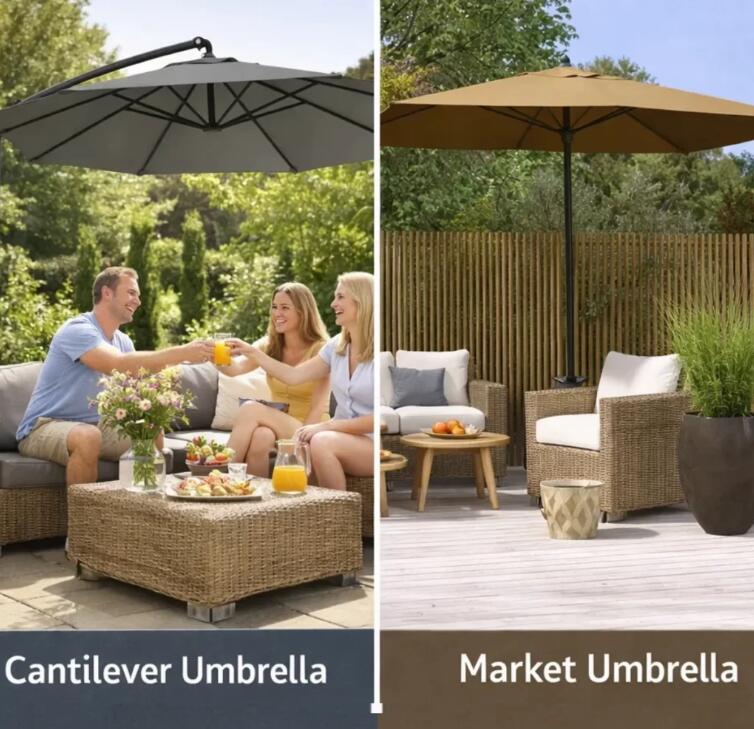
Market Umbrellas
-
The Design: Featuring a traditional straight center pole, these are the classic choice for dining tables with built-in umbrella holes or standalone placement between two chaise lounges.
-
Best For: Symmetry, classic aesthetics, and high-wind environments (as the center gravity is highly stable).
Cantilever (Offset) Umbrellas
-
The Design: Suspended from an overhead arm supported by a heavy side-post, the canopy hangs freely over your space without a central obstruction.
-
Best For: Large sectional sofas, deep seating groups, or over hot tubs where a central pole is structurally impossible.
-
Pro-Tip: Look for models with 360-degree rotation and multi-position vertical tilt to track the sun smoothly throughout the day.
2. Fabric Performance: The Defense Against Bleaching and Weather
The canopy fabric faces the harshest elements. Cheap polyester umbrellas will fade, stretch, and tear within a single season. To ensure longevity, look for these commercial-grade textile classifications:
-
Solution-Dyed Acrylics (e.g., Sunbrella®, Outdura): This is the gold standard. Instead of printing color onto woven yarn, the fibers are dyed before they are spun into yarn. The color goes all the way through the core. These fabrics offer 98% UV protection (UPF 50+), are highly water-resistant, and won't fade for 5 to 10 years.
-
Olefin: A highly durable synthetic fabric that is eco-friendly, quick-drying, and offers excellent resistance to chlorine and mildew. It is an excellent mid-tier choice for poolside environments.
3. Frame Engineering: Choosing the Right Core
The frame (pole and ribs) must withstand mechanical stress and wind shear. The choice of material impacts both maintenance and wind-resistance:
| Material | Pros | Cons | Best Aesthetic |
| Marine-Grade Aluminum | Rust-proof, lightweight, exceptionally strong, powder-coated finishes available. | Modern look can feel less organic in rustic designs. | Contemporary, Minimalist, Coastal |
| Premium Hardwoods (Teak/Ipe) | Naturally weather-resistant, gorgeous organic patina, premium luxury feel. | Requires occasional oiling; less flexibility under high wind. | Resort, Classic European, Tropical |
| Fiberglass (Ribs) | Extremely flexible; bends with wind gusts without snapping or bending out of shape. | Often combined with aluminum poles rather than standalone. | High-Wind, Commercial Zones |
4. Operational Mechanics: Lift and Tilt Systems
A premium umbrella should be effortlessly functional. Pay attention to how the umbrella opens and adjusts.
-
The Lift: For smaller market umbrellas, a pulley and pin system offers reliable, old-school durability. For larger or cantilever models, a heavy-duty crank system with a stainless steel aircraft cable is mandatory for smooth operation.
-
The Tilt: To block the low-angled evening sun, a tilt mechanism is crucial. Premium options include a collar tilt (twisting a ring above the crank) or an auto-crank tilt (continuing to turn the crank to tilt the canopy after it opens). Avoid cheap push-button tilts, as the internal buttons are notorious failure points.
5. The Golden Rule: Engineering the Base Weight
The number one mistake homeowners make is under-specifying the base weight. An umbrella is essentially a giant sail; without a proper anchor, it poses a severe safety hazard.
The Professional Benchmark:
Table-Supported Umbrellas (up to 9ft): Minimum 50 lbs (23 kg) base.
Freestanding Market Umbrellas (up to 9ft): Minimum 75 lbs (34 kg) base.
Large Cantilever Umbrellas (11ft - 13ft): Minimum 200 to 400 lbs (90 to 180 kg). This often requires a heavy blow-molded base filled with sand/water, or a direct concrete bolt-down mount.
A premium outdoor umbrella is an investment in architectural comfort. By pairing a solution-dyed acrylic canopy with a powder-coated aluminum or marine-grade teak frame, you create a shaded sanctuary that effortlessly elevates your outdoor living experience for years to come.
Comment


-(1).jpg?w=3500&h=2625)


.jpeg?w=1600&h=1600)