How to Keep Your Patio Furniture Looking New Through Every Season?
Nobody needs a twelve-step maintenance routine. What you need is to know which four things, done at the right time of year, actually make the difference between furniture that lasts and furniture that gets replaced.
Spring is when you inspect.
Pull the cushions off, look at the frame joints, and check whether your wood has gone dry and pale. That paleness is your cue to oil — not a problem yet, just an early signal. It's also the moment to notice the small stuff: a wobbly bolt, a scuff on the powder coat, a seam starting to come apart on a cushion cover. Five minutes in April saves a lot of regret in August. If you have wood pieces, this is the month they want attention, and the good news is that oiling takes less time than making coffee.
Summer is when you mostly do nothing.
Rinse things off, spot-clean spills before they set — red wine and sunscreen are the two that leave a mark if you let them — and try not to leave your cushions out in the full sun day after day if you can help it. UV is what fades fabric, and even UV-resistant olefin cushions appreciate a break. If your cushions get rained on, don't leave them flat and damp. Flip them up on their edge so air can move through both sides, and they'll dry without the sour smell that follows a cushion left to stew.
Fall is the one people skip, and it's the one that matters most.
Whatever you're not using through the winter should be cleaned and covered before the wet season starts, not after. This is the whole trick. A cover on a dry piece protects it; a cover on a damp piece traps the moisture in with it and makes things worse. Most sets in this category ship with a free sofa cover, and it's the cheapest insurance you'll ever buy. Take an hour on a clear afternoon, clean the frames, let everything dry completely, then cover it and forget about it until spring.
Winter is when you leave it alone.
Don't wrap things in plastic sheeting, which traps condensation inside and won't let anything breathe. Don't stack cushions in a damp shed. Let air move, and let the cover do its job. If you do have to check on things, do it on a dry day and put everything back the way you found it.
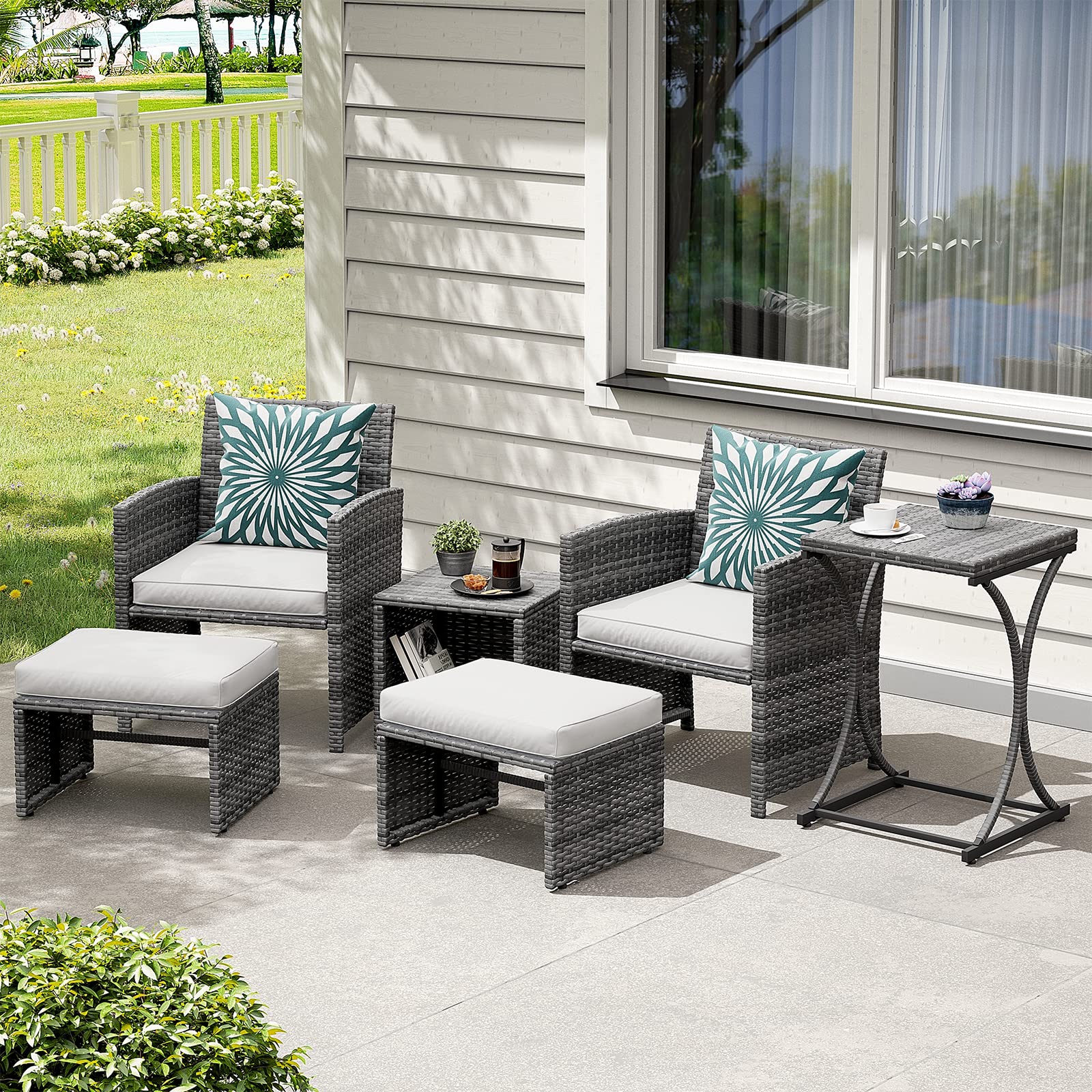
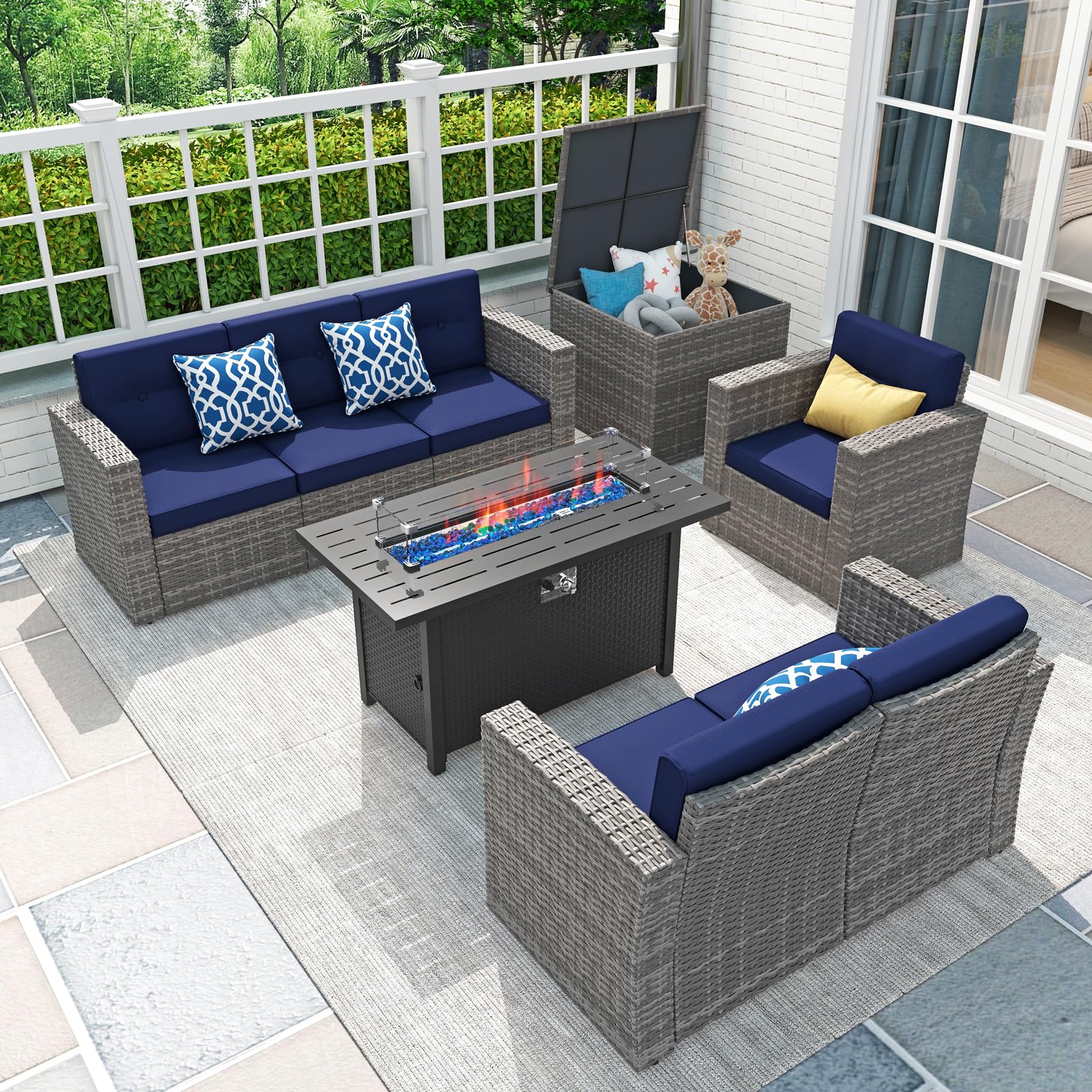
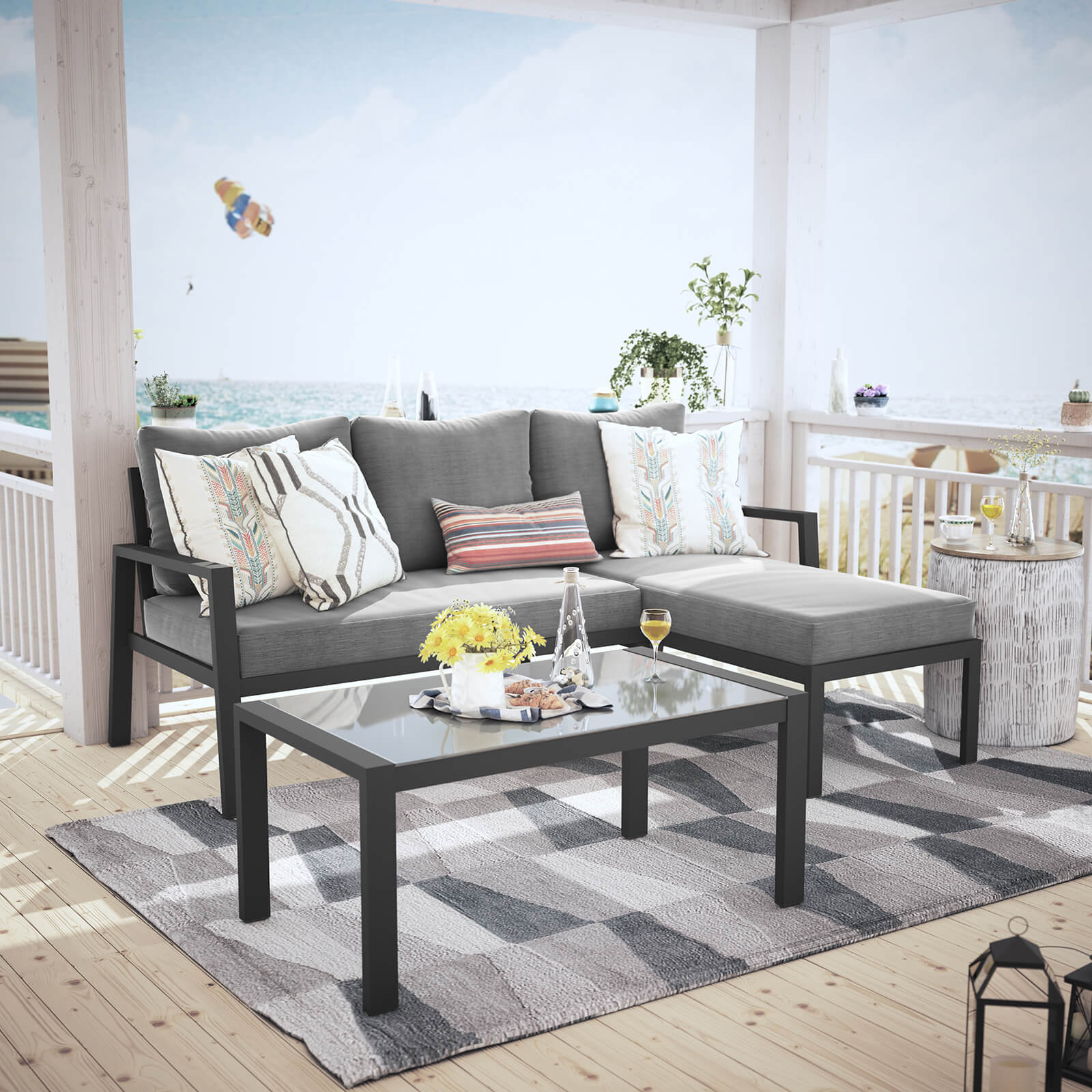
Material-specific, quickly, because this is where people overcomplicate it. Wood wants an oil top-up once a year — a thin coat, wiped on and buffed off, no special equipment. Wicker wants a soft brush and a rinse, plus a mild soap and water solution for anything that's set into the weave. Aluminum wants nothing but a damp cloth, and occasionally a look at the coating to catch a scratch before it becomes a conversation. That's genuinely all of it. No waxes, no sealers, no products you have to hunt down online.
Do those four things, once a year each, and the set you bought this spring is the set you still have in eight. The furniture doesn't ask for much — it just asks for it on time.
Comment